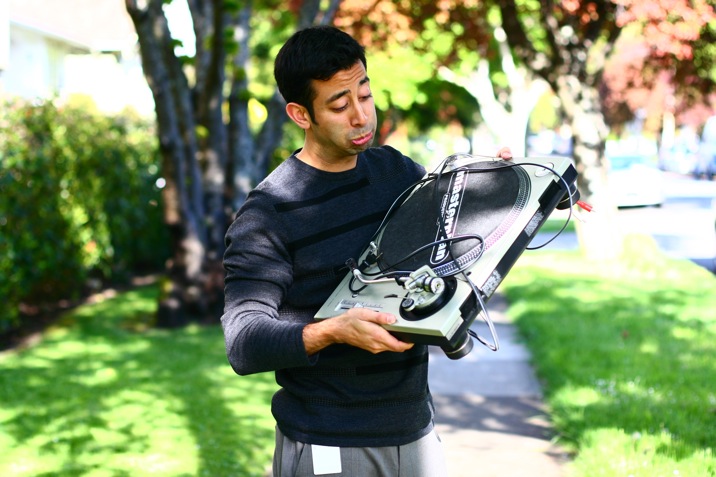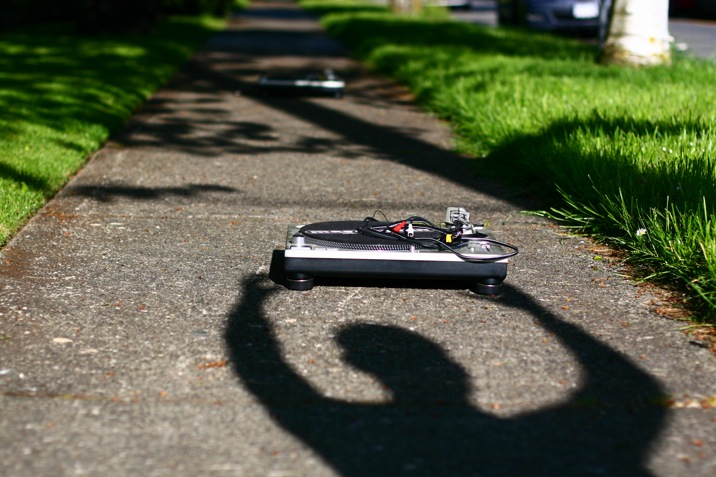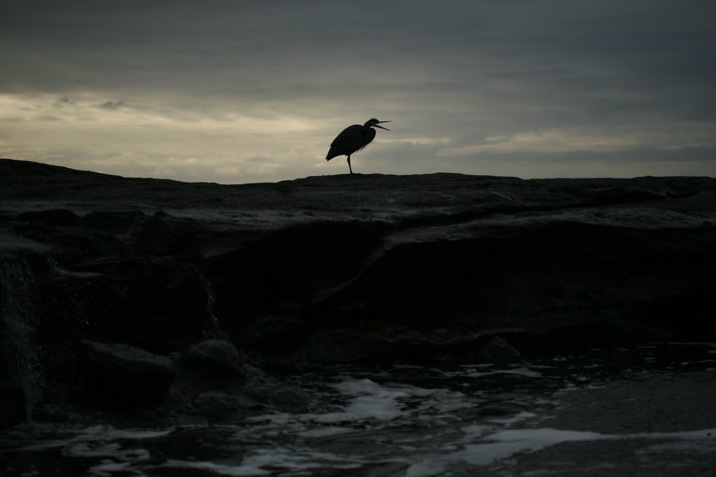
I took the above photo of my good friend Casey Jo, just before she was about to say ..
—
As time goes by, and I create more and more through many different platforms, programs, and processes, I’m beginning to notice which are most successful and why.
At one point I believed I just “wasn’t feeling creative” when I sat down in front of my computer and failed to blog the 150 photos I would take with my DSLR from the weekend past, complete with descriptions, post processing in photoshop, upload via FTP, and a written summary of the experience. I also decided I wasn’t “feeling motivated” to write music, which meant sitting down and composing, arranging, effecting, mixing, and sometimes mastering a track, all on a computer screen.
Some time around September of last year, I picked up an iPhone 4. It has a couple cameras on it, both vastly inferior to the DSLR I have, much like the Sony Ericcson phone I had before it. I made some notes on the difference between taking photos with my iPhone and DSLR/Computer. Nothing from that has really changed. But all those steps involved with the updating from DSLR suggest a higher level of impedance to my artistic expression than the iPhone. For that reason, I quite often use my iPhone more than my DSLR.
Applications like Instagram, MoreLomo and Tumblr get heavy use even though they are not as technically full-featured as alternatives on the desktop. In these cases, less process is exactly equal to more creative output. That is to say, less steps equals more usage. There is less impedance between my creative experience and the subsequent expression.
On that note..
Extending this lens to music making, there are remarkably far more steps to writing a compete song in Reason than there are to singing a song and recording it. To be clear, I am not saying one is easier or requires less skill. There are all sorts of classes one could take in singing to hone the expression of it. However, the state of expression largely will remain the same (just more refined and sophisticated). The same cannot be said for an art form which is proportionately more technical in nature, such as electronic music production, which is at the mercy of the software developers and how they interpret our workflow, if we are lucky enough that they do so at all. Relating it to singing, this means that there can be many busy-work computer-based steps before intent meets voice. Impedance.
Recently, as an experiment, I tried making a song in Ableton Live from start to finish, instead of the back and forth I usually do between Ableton Live and Reason. While I am very proficient in Reason (and in my opinion, that software is really, really well thought out), I found I was spending a lot of time (and process / steps) in Reason getting sounds that I really liked, whereas I was spending relatively little in Ableton Live. I ended up finishing a song I was happy with in 3 sessions over a weekend; compare that with the 1-6 month process I spent in Reason on each song, and you get the idea.
What happens when an idea takes a long time to express?
I find the longer an idea takes to express, the more it is at risk of losing its raison d’être; that is, each idea has a reason for existence – an essence. Each revision can either make it deeper and better, or wider and weaker – less focussed. A lot of musical and design ideas have depth in simplicity from the get-go, and more time spent on it can be equal to the gradual destruction of the idea itself. Does this sound silly or does it sound like science? I’d be curious to hear other people’s ideas on how to preserve idea integrity for maximum expression.
How broad is this topic?
I realized that when I had been thinking about this topic over the last two months, it’s pretty deep, and I likely will not be dropping it after I make this post. I am sure I will be revisiting this as I apply the concept to different areas.
One area it got me thinking about was today’s Federal Election. I saw some numbers from the previous election which mentioned there were more Canadians on Facebook than there were at the polling booths. That said a few things to me:
- Canadians are addicted to facebook
- Canadians could be apathetic about voting because they think everything is fine
- Canadians could be apathetic about voting because it’s too annoying to go out and do it – we can do our taxes online, why can’t we vote online?
- Canadians could be apathetic about voting because they think they cannot have an effect on change anyway – the process has the ability to hide their opinion
That list could go on. I’m sure there’s lots to add. Having voted in the Advance Poll last week, I am not standing in lines in the rain to do so today, but I can see how unappealing that would be to a lot of people. Last week I went to the wrong polling station and barely squeaked in before 8 PM to the correct polling station, a 15 minute walk away from where I was (which was 5 minutes from my home.) I don’t consider going out to vote to be a big deal, but with everything else online, why isn’t voting yet? I get the points about security, but I’d counter with the fact that there are some pretty smart security experts out there who could get it done right. I figure that the less steps there are to formally expressing yourself in a modern democratic nation, the better the process will reflect those who it must serve.
Today, I’m not so sure the lack of online voting is a problem, but it might be a part of a Gladwell-esque tipping point scenario. At this stage of my life, most of the friends who I’ve talked to who do not vote are doing so to make a point – they do not believe in the system or the process. I’m not sure how much I do either, but I do see the opportunities for improvements.