This image is a hybrid of paperclips, filtering and photography by Adam, and more photography and vectorizing, scaling, recolouring and layering by myself. creativity!
But what could it mean?
This image is a hybrid of paperclips, filtering and photography by Adam, and more photography and vectorizing, scaling, recolouring and layering by myself. creativity!
But what could it mean?
Leadership is a topic I gravitated towards in my business degree years ago. I stocked up on leadership electives and applied the concepts broadly in all of my other courses as much as possible, since one of the roots of business is leadership in essence. Whether you’re building a new company, changing the course of an existing one, or maintaining a the existence of an organization through turbulent economic conditions, leadership continues to matter, if not magnify. You can have all the hard skills in the world to run a business, but if you do not understand primal leadership, you’ll be running a business on your own. Possibly with no clients.
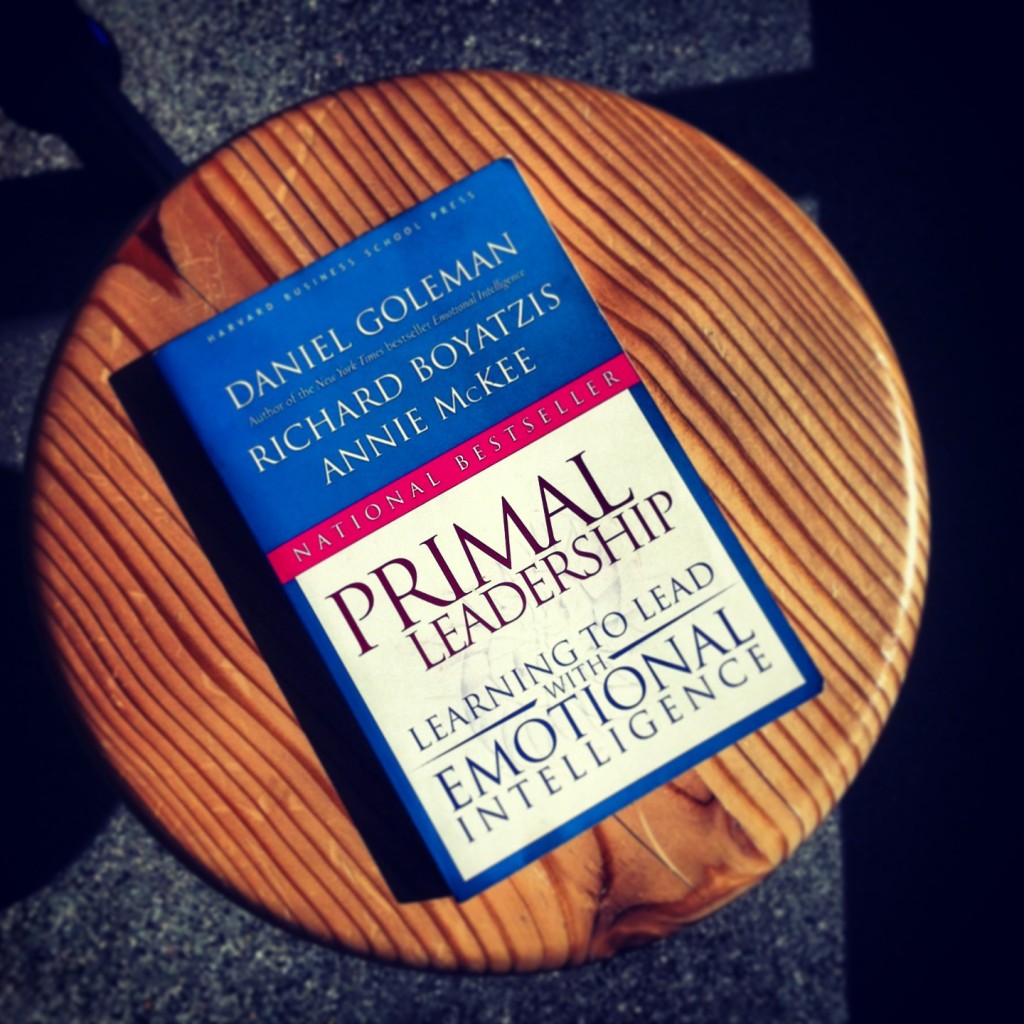
One of the best books I read on the topic of leadership wasn’t part of the curriculum at all. This one, Primal Leadership, was handed to me by a friend who travels the world and gives advice to nations looking to improve their health care systems. It’s a book by three authors, one of which you may know because he wrote the book on Emotional Intelligence.
Short form: If you’re in a leadership position and you do not have a grip on this subject, you can unwittingly destroy your organization from the inside with ease. I’ve seen business owners annihilate their own organizations first hand because they didn’t understand how their decisions were affecting those around them. Myself, I have also done or said some things that I regret, after having understood this subject better through this book in particular.
Longer form: As a general theme, the focus on transformational development rather than transactional drilling means that the leadership role relates to the environment it exists in, ie the real world, where change is a certainty, and it has an affect on team members not just in energy terms, but also in emotional terms. Being aware of the emotional wellbeing of your team, clients, citizens, as well as yourself requires specific competencies, which we do not all have by default.
Four major concepts are explored through a variety of organizational and environmental lenses in story form and in straight up research-driven reporting:
As you may have guessed while reading that list, these concepts can explode into vast depth in book form.
They do.
This book has oodles of data and stories to explain why this approach matters so much. My opinion is that energy is precious, and we live in an economy of individual good-will, where people only put their best in if they feel they are valued and treated well. When that feeling leaves them, so does the prospect of their best energy, ideas, and ultimately work. Without emotional intelligence, our ability to count the currency of good will is abysmal at best.
With emotional intelligence, less time is spent on:
With primal leadership, more time is spent on:
There’s quite a bit more that I could talk about, but I feel like I have said enough in this post for now. If you want to chat more about this subject in some sort of specific context, connect with me.