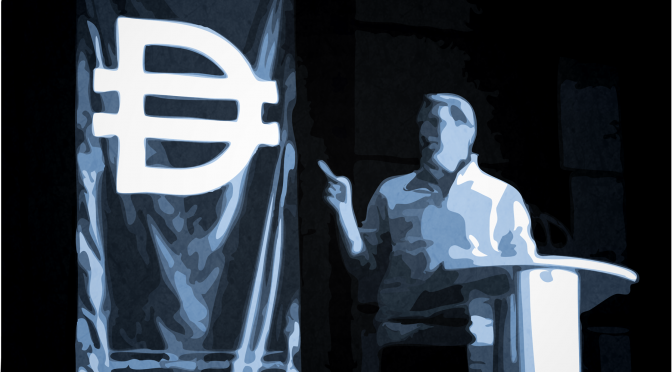
Cameron Sinclair at Design Currency

This week I wrote a post about Cameron Sinclair and Architecture for Humanity.

In and amongst all the discussion at and about Design Currency – now a week and a half ago – there is one talk that stands out for me. And it is not to do with the way it was said, or its value to business, or its philosophical implications, or its parallel struggles with marketing in the corporate decision making process. It had to do with Cameron Sinclair’s talk on architecture for humanity, an organization that he founded:
“Architecture for Humanity is a nonprofit design services firm founded in 1999. We are building a more sustainable future through the power of professional design.”

Sounds good. But what does that mean in practice? The most recent (and current) example illustrates this well…
It would be hard not to notice the massive earthquakes in the news lately – in particular Haiti’s 7.0, and Chile’s 8.8. If one were to continue to follow the stories, it would also be hard not to note the difference in casualties:

  • Chile 8.8: 486 fatalities, 79 missing
  • Haiti 7.0: 92,000 – 230,000 fatalities

Cameron was pretty quick to point out that earthquakes don’t generally kill people – buildings do. And poorly designed buildings at that. Since Chile experienced the incomprehensibly large 9.5 Valdivia earthquake in 1960, they had re-examined how they design buildings – requirements for seismic response changed in response to the environment. The building codes are stricter than a place such as Haiti. And so now we have a case where difference in design policy means a completely massive difference in how a country survives an earthquake. Chile was rocked by the 8.8 earthquake and ensuing tsunamis – any country would be – but Haiti’s buildings were annihilated, and they came down on the people inside.

This is not a trite design discussion. Here we have an extreme example of design currency being equal to human life itself. As was pointed out at Design Week, Haiti is not waiting to rebuild. They’re doing it right now. They have to.

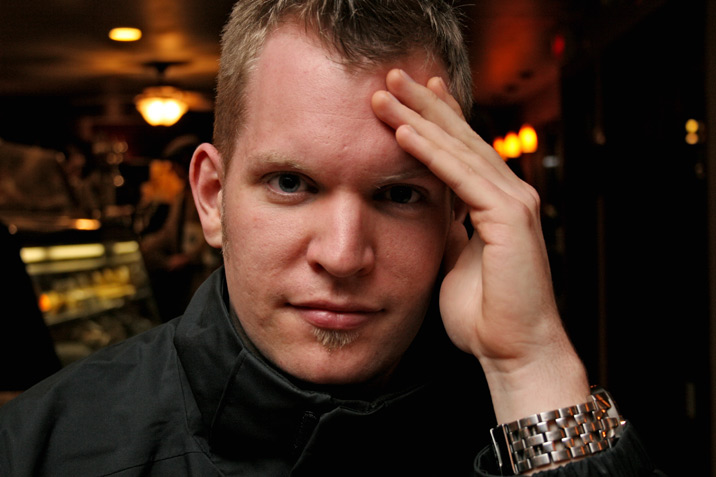
My hat is off to Cameron Sinclair (pictured above) and those at Architecture for Humanity and the Open Architecture Network – an organization which is making better building plans accessible to everyone who is building – or in Haiti’s case – rebuilding.

Find out more about the Haiti rebuilding project on the Earthquake Reconstruction in Haiti page.


Some notes on how I made the image above:

  • I took the original shot during Design Currency on a Canon 30D with a 50mm lens at F1.4
  • Image was resized and refinished in Photoshop and imported to Illustrator
  • Spent some time tracing edges in Illustrator, adjusting palette and curve threshhold until his finger and his head looked the way I wanted, as well as the Design Currency logo
  • Exported back into Photoshop for the radial gradient linear burn, texture overlay with a soft-light blending mode, and a colourized resaturation to get the blues “just-so.”

Look at the large version to see more of the details (the largest version is over 3000 pixels wide, a bit too large for webbiness.) Some would say the above look is played out, but I think it’s the lack of care in using presets and effects that is played out, and the process itself can still yield pleasing results if done with care.

Design Currency: Defining the Value of Design

Design Currency: Defining the Value of Design
This past week was Design Currency: Defining the Value of Design, an installment of Icograda’s world-wide Design Week series. This was a multidisciplinary design conference – there were speakers that had backgrounds in business, education, marketing, advertising, industrial design, journalism, city planning, consulting, strategy, and much more.
I’ve written a number of posts on defining the value of design and the conference:

What I really liked about this event was how well-rounded it was. This was not a technical skills-oriented conference where you’re taking tutorials or talking about new technology. This was a meeting of the minds about the philosophy behind design itself – why do we design, and what place does it hold in society? There were many inspiring talks and perspectives, far too much to recap here. I recommend checking out some of the links I’ve provided with the photos below, and of course the Speaker Interviews from the Design Currency website.
One of the highlights for me was the Dinner with a Side of Design series at the Irish Heather in Gastown. Myself, Matt Warburton (Emdoubleyu), Helen Walters (BusinessWeek), and Phil Kneer (IBM) debated and designed the city of the future. We called it Village 2.0, and I assure you, it is nothing like Sheffield.
This event was bookended with the GDC National AGM at the beginning and the Graphex Awards towards the end. I did not make it to Graphex, but the GDC AGM is worthy of its own post and so I’ll leave it at that. On to the photos!
Below are my photos – I’ll provide information where I can.

Continue reading “Design Currency: Defining the Value of Design”

my new tree

palm_tree_pony_tail.jpg
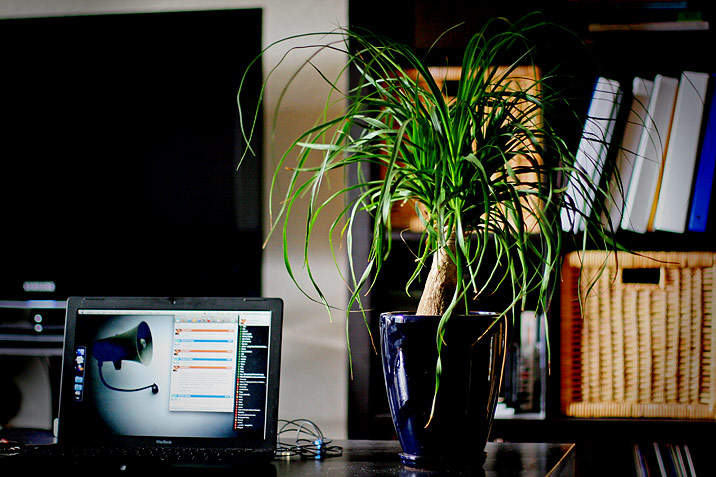
Here is a tree. It now lives in the same place as I do – it just moved in earlier this week. It enjoys watching television and basking in sunlight. This kind of tree is referred to as a Pony Tail Palm Tree.
In other plant-related minutiae, I have either killed or extended the life of my bamboo. The bamboo was getting way too big so I had to cut it down and divide it. Now it lives (maybe?) in two different glass vases. We’ll see if I did this right. There is a fairly good chance that I did not.
Design Currency 2010 in Vancouver is only a couple weeks away. The updates continue and the details are coming together – I’ll be in Vancouver for what looks like a week later this month.
Since this is a collection of randomness, I want to say that I find it weird how sound seems to change tempo when I yawn. It accelerates which must mean I am actually relatively slowing down my hearing process when yawning. I have never heard anyone detail this or explain it but I bet there is some good reason for it.

Interview with David Bain

david_bain_surge_ahead.jpg
If Victoria’s seemed more fun and interesting at night recently, there’s a good reason why. David Bain from Surge Ahead Productions leads the charge of a new generation of promoters who are bringing diversity, meaning, and excitement to the Capital City when the round lights come on after dusk. I sat down with David recently and caught up with him over a coffee at the Moka House in Cook Street Village. He shared his perspective on promoting and the philosophy behind his production company:
DG: What is Surge Ahead Productions, and what does Surge Ahead specialize in?
DB: Surge Ahead in a nut shell is a “new age” marketing company that focuses on breeding generational ideas/theories/trends into traditional business models. Focusing on this strategy we specialize in event marketing, social media, visual graphic design, marketing plans, and videography.
DG: How did you start Surge Ahead Productions?
DB: I started Surge Ahead while working on my BBA. I was fed up, doing assignments that had no application. I started scheming how I could double dip my business life with my post-secondary life. Surge merged shortly after as a marketing company that focused on events. To date, we give post-secondary students a foundation to double-dip and create “real-world” business experience.
DG: What is your vision for the company? What kind of events do you make it a mission to produce?
DB: My vision is to create Surge as a leader in generational marketing. Many people believe marketing is part of sales or events – these people are outside the loop of marketing. My goal is to show clients true marketing and what it can achieve.
The event business is tricky. Overall I want to create events that have a lasting impression and that aren’t empting pockets. I think it’s important where applicable to brand or bring awareness to non-profit organizations in events as well, it’s a free source of advertising for them and really doesn’t cost the event management much thought.
DG: Are there any causes that you feel strongly about that have an interaction with your events? Do you feel that makes a difference to your customers?
DB: I am not particular to any one cause. I am open and willing to support any cause that has direct sources of funding or can allow for programs that deposit directly to outcomes. Let me give you an example. About a year ago I asked one of my sponsors Reef to directly fund a surf camp for 15 kids from Big Brothers Big Sisters Victoria. It went off, the kids had a great time, the staff gained a huge experience and there was no distribution to causes outside these kids experience. Events wise I have had Surfrider Foundation, Ski Patrol, and Big Brothers Big Sisters all in attendance to breed some awareness. Does it make a difference to the attendees? Yes, it engages attendees directly and educates them on their causes rather. Really it creates an unpressured environment that lends a hand to creating positive future come out-comes to non-profit organizations.
DG: What are some of the challenges that the Victoria market presents for a production company?
DB: The Victoria market is like no other. The main issue that event producers have within Victoria is the lack of venue space between 200-400 and 600-1000 capacity and the issue that arises from only having two clubs that do weekend shows. This means that competition for larger name acts increases because sell-outs are harder and local bands seemed to be over-looked. So in the end producers are very tight on who they are bringing as attempt to control their respected market. At Surge we are focused on local first, if you have draw and a great sound we want you on board.
DG: Who has been an influence in the kind of shows you do?
DB: I couldn’t say that I have had one influencer in the event business. Any event that creates a vibe in the room and makes people walk away chatting about it influences me to keep going. On the marketing side of things I have been mentored/influence by Dan Dagg (Hot House Marketing), Frank Palmer (DDB Canada), Joan Yates (Camosun College), and Cynthia Wrate (Camosun College).
DG: What has been your favourite production to date? What made it stand out for you?
DB: My favourite to show to date has to be my second show at the late Steamers Pub in Victoria BC. I had Jon Middleton from Jon and Roy and Shane Philip play an amazing show that made sweat feel good. Everyone walked away from the show happy including me, just a really great energy that has stuck with me to this date.
DG: Who has been instrumental in your success? Who would you like to thank?
DB: Anyone client, sponsor or attendee has been instrumental in my success and I am thankful for how lucky I am to be living the dream.
DG: What sets Surge Ahead apart from other production companies?
DB: What sets us apart in the event industry is we treat everyone equally and leave the egos at the door. We always focus on rewarding where rewards are due. Whether we are giving free hand outs from sponsors to attendees or cutting down on ticket costs or mission is to create a event you want to come back to. On the marketing side of things we are different by the mere fact that our team is made up of the best and brightest in their respected market while all being part of Generation Y, X, or Z. We know the latest trends because we are living in them. Why hold back on traditional mediums when the world is changing at the blink of a eye?

Surge Ahead’s next show is Friday, April 2nd at Lucky Bar, featuring AFK & Vince Vacarro (DJ Set), Toby Emerson, and Natron.

Design Currency update

design_currency_2010.jpg
My blogging is all over the place – I realize that some of it isn’t quite right for the audience here, but this is also my own archive so deal with it ;).
This is what I posted last night on www.gdc.net:

Say what you will about the value of design, but one thing is clear: no two people think exactly alike when it comes to defining the value of design itself. And if the question of defining the value of design sounds like a simple one, let me assure you – you’re dead wrong. It’s not just about dollars and cents. Design Currency 2010 discussion has been going on at designweekvancouver.ca – there is information on the events, workshops, dinners, breakfasts, speakers, and information on where to stay and eat.
Interviews with speakers are being added every day in the Design Currency 2010 Interviews category.
Also I would be in some sort of trouble if I didn’t mention that I had a go at the topic myself on the Design Currency 2010 blog. Really, it is a continuation of the conversation that I had started on the GDC blog – defining the value of design – but it’s much more direct in its relation to the topic of the conference.
Finally, you really ought to treat yourself and have a look at the beautiful Design Currency 2010 video by Rethink – it is below.

AFK – Sunset Sessions: March 2010

Sunset Sessions is my new mix series that is appearing as a part of Sunset Collaboration’s weekly series of music. I will be doing a mix every three months as my contribution. Here we have some of the best music since last August, in my opinion. Starts off with downtempo, moves into breaks, progressive, and finally something which I don’t know what genre to call – doesn’t matter, it’s quite enjoyable.

Tracklisting:

  1. Faskil – It Puts Me To Sleep (Prelude mix) [Frisky Records]
  2. Oleg Zubkov – New Parallels (Fretwell remix) [Mistiquemusic]
  3. Michael Cassette – Kilimanjaro (Solarity remix) [Anjunadeep]
  4. Gemma Hayes – At A Constant Speed (Faskil remix) [White Label]
  5. Dave Horne – Q.E.D. (Original mix) [Anjunadeep]
  6. Proff – Starstruck (Solarity remix) [Silk Royal]
  7. Mat Zo and Tyler Michaud – Battle Royal (Original mix) [New School Recordings]
  8. Sander Van Doorn – Ninety (Original mix) [Doorn Records]
  9. Mat Zo – Nuclear Fusion (Original mix) [Anjunabeats]
  10. Christian Luke and Chardy – Because We Want To (TV Rock Remode) [Neon Records]
Download: AFK – Sunset Sessions: March 2010 (mp3)

Right click and Save As, or option-click the link on a Mac to automatically download